Frequently Asked Questions
|
| The Products
|
|
|
| French Press Coffee Preparation
|
|
| |
| |
| The Products
|
| |
Where are the products manufactured?
All our Planetary Design products are designed here in the United States and manufactured in China. Although we would prefer to have all the manufacturing done in the United States, in order to pass along the best possible prices while maintaing great quality, this provides the best option. However, we travel several times a year to our plant in China to ensure safe and fair working conditions for employees at the facility. We have excellent relationships with the employees there and feel that it is hands down the best manufacturing facility in China. As an additional measure and ongoing commitment to our local economy we often have quality checks done locally by an organization in our community dedicated to providing employment opportunities to handicapped individuals. In a nutshell, we feel as though we take every measure to provide quality products at affordable prices while maintaining integrity to our local and national economy and the environment as a whole.
|
| |
Can I put this in the dishwasher?
All Chrome, Black, Mango, Wasabi, Cornflower Blue and Iris products are top-shelf dishwasher safe. The acrylic color on the Paprika, Mocha, Green Tea and Lavender colored products will begin to peel over time and thus we recommend hand-washing for these particular colors. All componantry is top-shelf dishwasher safe.
|
| |
Do the French Presses work for tea?
Absolutely. Although the presses were originally designed for coffee they function as loose-leaf tea presses as well. The same directions apply, follow the steeping guidelines for the particular type of tea you are brewing ( try this page for general tea information and steeping guidelines) steep to taste, press and enjoy. The only negative feedback we have received regarding French Pressing tea is in regards to strong green teas. Because of the texture and density of tea leaves versus coffee grounds, after approximately 2 hours post pressing, you will begin to notice a bitter taste from the continued infusion. (Jump here to read why this does not occur with coffee grounds.) Finally, unlike many presses the stainless steel inner body will not retain the flavor of previous beverages. So enjoy coffee in the morning and coffee-taste-free tea in the afternoon!
|
| |
Is there glass in the liner?
No. Years back companies chose glass for it's insulative properties. Then along came stainless steel technology which solves the 2 major dilemmas of glass; heat retention and durability. High quality stainless steel provides significantly better insulation, is obviously more durable and won't retain flavor from beverage to beverage. We use double-walled, 18/8 restaurant-grade stainless steel, one of the most advanced and durable materials on the market. Beyond aesthetics, should one prefer the traditional and somewhat more sophisticated look of glass, stainless steel is a far more superior material. Coupled with our striking colors we feel that we've found the perfect balance of form AND function.
|
| |
How long do they keep beverages hot?
Generally speaking, all of our products will retain heat for longer than 8 hours. It's the single most raved about feature of our products. Technically speaking, all of our Table Top French Presses, drinkware and Vacuum Bottles are not only double-walled, 18/8 restaurant-grade stainless steel but they are also vacuum-insulated. What that techno-jargon really means is that there are two walls of this high quality stainless steel insulating your hot, cozy beverage from the ambient temperature outside the mug. Then, a machine will literally suck the oxygen, nitrogen, carbon dioxide, and other trace gas molecules that make up air, out of the space existing between those two walls. Hence, there is no medium for the ambient temperature to "sneak" through the mug, lowering the temperature of the aforementioned cozy beverage. The current tests estimate that having vacuum insulation in a mug increases the heat retention capabilities by 33%. Add this on top of what 18/8, double-walled stainless steel already provides and you've got the makings of the perfect beverage accessory.
|
| |
Why are the French Press Mugs not vacuum-insulated?
This is a great question. Although vacuum-insulation is amazing technology we decided that at some point it may be overkill. The French Press Mugs were a great example. The double-walled, 18/8 restaurant-grade, stainless steel alone provides incredible insulative properties. This by itself will keep your beverage piping hot for at least an hour and drinkably hot for roughly 2 1/2. Considering most people will have consumed their beverage well before 2 hours, it didn't make a lot of sense to increase the price by adding the vacuum insulation properties. The Table-Tops and Vacuum Bottles however, are expected to retain heat for extended periods of time and at that point the vacuum insulation became a neccessity.
|
| |
I ran over my lid. Can I buy just a new lid or plunger assembly?
"I lost my lid" is the single most popular phone call conundrum. Planetary Design warranties against product malfunction but unfortunately not against absent-mindedness. However, you can purchase replacement parts here from a trusted retailer.
|
| |
What is the warranty on your products?
We warranty all of our products against manufacturer defect for one year. As we do not sell retail, you must go through the retailer from which you purchased your mug. They will require some proof of purchase and will then deal with us on getting you a replacement. For the record, however, this does not occur often as our products are truly quite dependable.
|
| |
What materials are used in the manufacturing of your products?
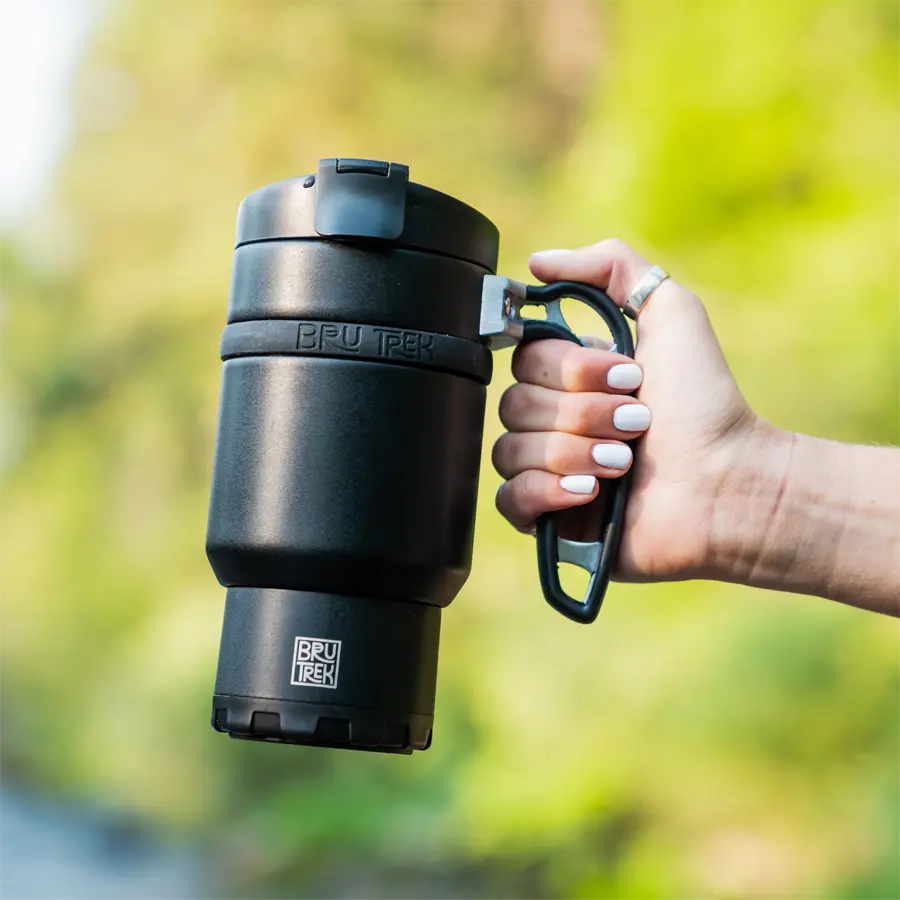
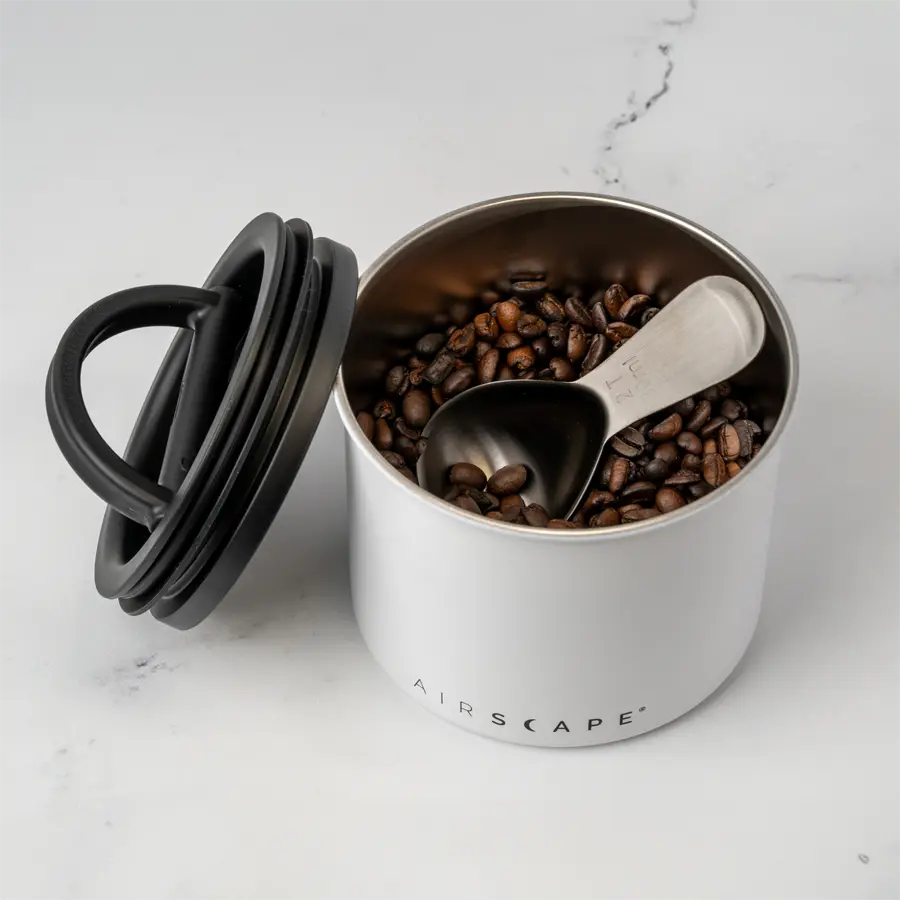
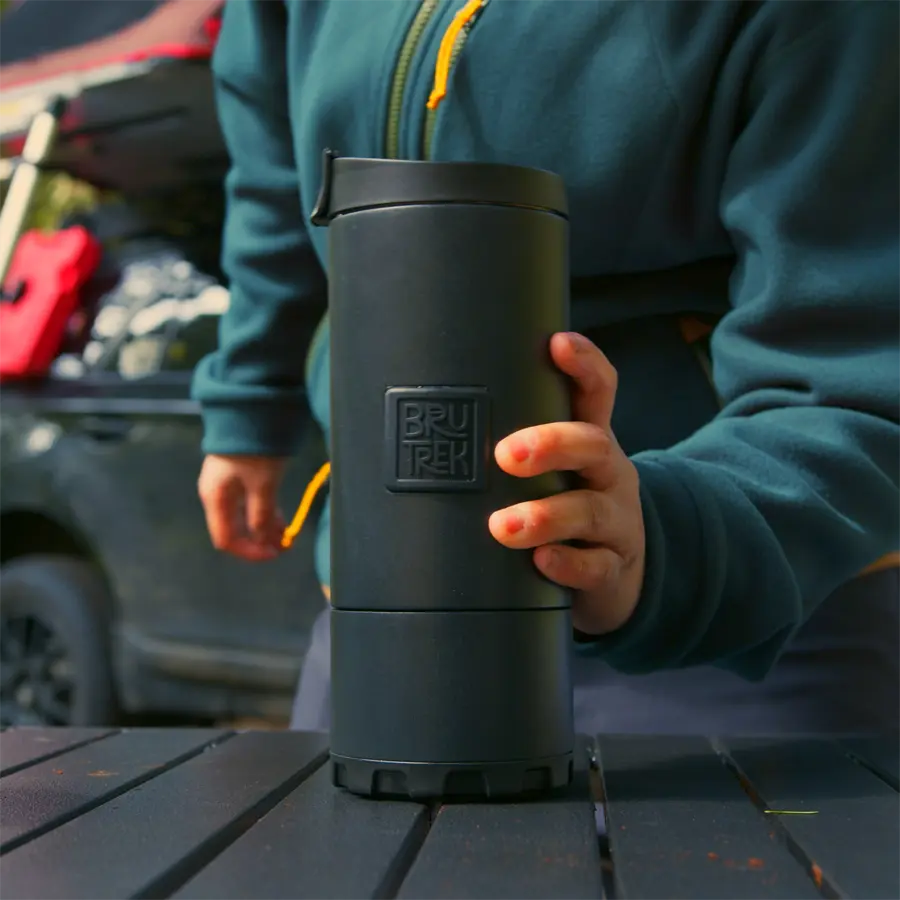
The majority of a Mug, Table Top, Vacuum Bottle or AirScape is 18/8 restaurant-grade stainless steel. This is an extremely durable, food-safe, thermal material. The press is contructed of the highest quality plastic BPA-free (PP plastic) and a fine, high-quality, stainless-steel mesh screen. The color coat is either a scratch resistant, baked enamel finish or a scratch resistant acrylic. There are rubber rings on the Table Tops to create a tight seal and rubber rings on the mugs for grip and aesthetic purposes.
The tea brewer is constructed of a durable, Polycarbonate BPA-Free plastic designed to withstand high temperature from both boiling water and the dishwasher (we recommend top shelf).
|
|
|
|
|
| French Press Coffee Preparation
|
| |
Why French Press?
The French press method, or "plunger method" has, and continues to be, the standard by which coffee is judged simply because it is the most pure way of preparing coffee. With the ability to control the grind, the steeping temperature and steeping time, one can custom brew the perfect cup of coffee. Read more about the French Press method in our Coffeeology 101 section.
|
| |
What kind of grind do I use?
The settings you'll most likely see on most grinders (from fine to coarse) are: Turkish-Espresso-Drip-French Press. Generally speaking, although French press is a more coarse grind you'll still want to use as fine a coarse grind as you can without allowing grounds through the filter. This allows for optimum infusion of the grounds. The difference between Drip and French Press really is quite small and Drip grind usually works just fine. If you notice the plunger becoming difficult to push down, this is most likely due to the grind being too fine, or there are simply too many coffee grounds in the press. Using a quality grinder is also key, as often time blade grinders chop coffee beans creating an inconsistent grind. If you are getting grounds in your coffee after pressing this is most likely the problem. Try a high quality burr grinder which provides a consistent grind at lower speeds, thus lowering your likelihood of burning the beans during grinding as well.
|
| |
How much coffee do I use?
The beauty of French Pressing coffee is that you have complete control over grind, water temperature, and steeping time, allowing you to create a custom masterpiece each morning. The amount of coffee varies per unique taste. However, as a general guideline first try using approximately 1 Tablespoon of ground coffee beans per 4 oz. of water. If you prefer a more stout brew use a little more and vice versa. The amount of coffee you use only becomes a problem if you use so much that it is difficult to then press them all to the bottom. In this case you should try a little less coffee, a little longer steeping time, or simply use a stronger coffee bean and/or roast.
|
| |
How long do I let the grounds steep?
Much like the question regarding the amount of coffee to use, the steep time varies according to personal taste. However, 4 minutes tends to be the standard steeping time. Approach 6 minutes and the coffee will begin to impart a slight bitterness from oversteeping.
|
| |
Is there additional infusing occurring by leaving the grounds in the bottom of the mug?
You'll get several different opinions on this matter but it is our position that the infusion that occurs after the pressing is scientifically negligible. Furthermore, after years in business we rarely, if ever, have gotten this complaint from our customers. In a nutshell, when the grounds come into contact with the water, the water is contacting every microscopic point on each individual ground. When the grounds are pressed to the bottom (picture a hockey puck), the overall surface area, (all the little points of contact) decreases thousands of times over, leaving the water very little surface area with which to continue infusion. You would start to notice that additional infusion a day or so later... long after, we hope, you've finished your mug of coffee!
|
| |
| |
| Email additional questions to info@planetarydesign.us |
| |
| |
|
| |
| |